Where every step tells a story.
Kathak classes taught by Ashmitha Gad, trained in the lineage of Pandit Birju Maharaj. Footwork, spins and storytelling, with Folk, Western and Contemporary dance alongside.
A lineage passed from teacher to student
In Kathak, technique and repertoire travel from guru to shishya. Every class at Ridhun comes through a direct line from one of the form's most celebrated masters.
-
Param guru
Pandit Birju Maharaj
Kathak maestro of the Lucknow gharana and one of India's best known classical dancers.
-
Guru
Sri Murari Sharan Gupta
A direct disciple of Pandit Birju Maharaj, teaching at Samam Centre of Movements and Dance.
-
Shishya and teacher
Ashmitha Gad
Trained under Sri Murari Sharan Gupta and completed the sixth year of Prabhakar in Kathak.
What you will learn
Kathak sits at the centre of every class. Folk, Western and Contemporary sessions build stamina, musicality and confidence alongside it.
Kathak कथक
A classical dance of North India built on rhythm, spins and storytelling. Students learn the building blocks in order, so each new piece rests on clean technique.
Taught in the style handed down from Pandit Birju Maharaj through Sri Murari Sharan Gupta.
- Tatkaar तत्कार
- Footwork that keeps time with the ghungroo, from slow to fast speeds.
- Hastak हस्तक
- Hand movements and arm positions that frame every step.
- Chakkar चक्कर
- Kathak's signature spins, learnt with balance and a clean finish.
- Abhinaya अभिनय
- Expression through face, eyes and gesture to tell the story.
- Padhant पढ़ंत
- Reciting the bols aloud before dancing them, to feel the rhythm.
- Taal ताल
- Rhythmic cycles such as Teentaal, and how to land on sam.
Folk
Lively regional dances that build energy, group timing and joy in movement.
Western
Rhythm, groove and choreography set to popular music.
Contemporary
Expressive, free-flowing movement that encourages creativity and body awareness.
In the studio
Group classes with hands-on correction, rehearsal for shows and the energy of dancing together.
Live online
Real-time classes over video call, so you can learn Kathak from home wherever you live.
Grace lives in the smallest movement
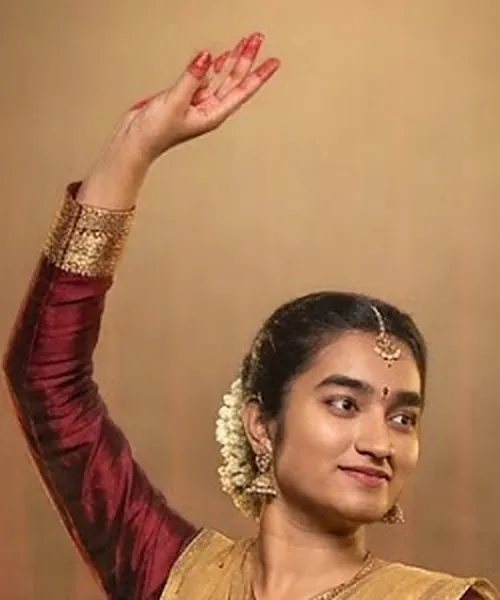
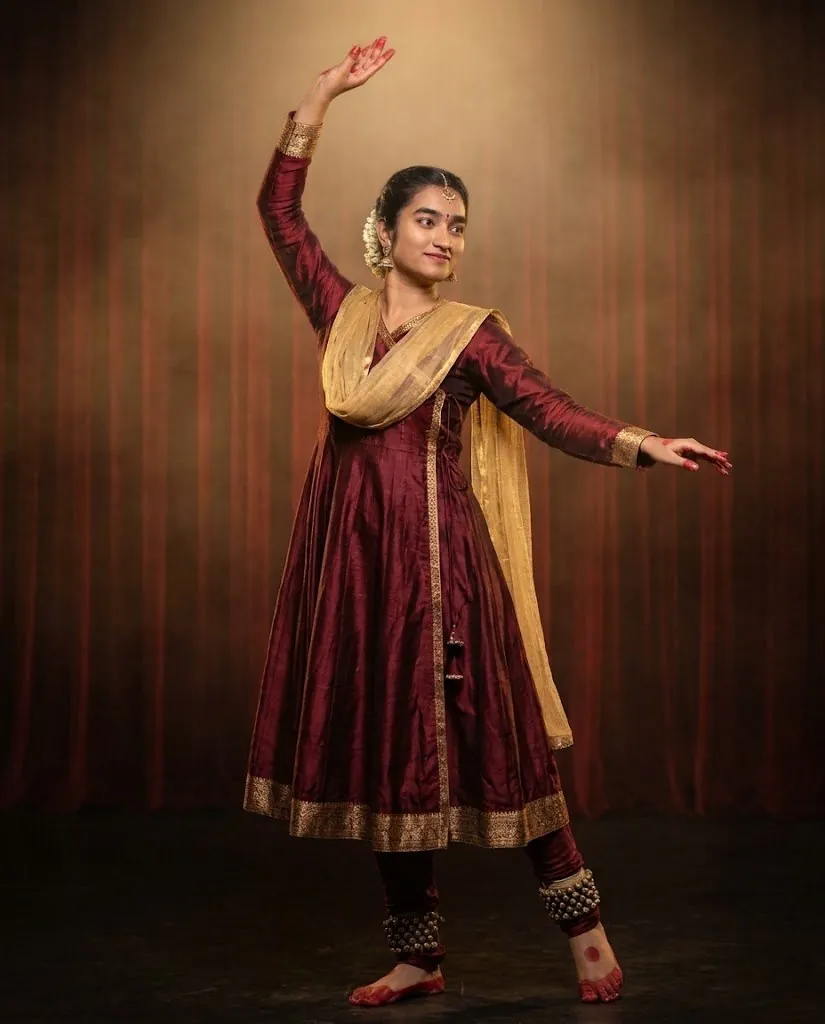
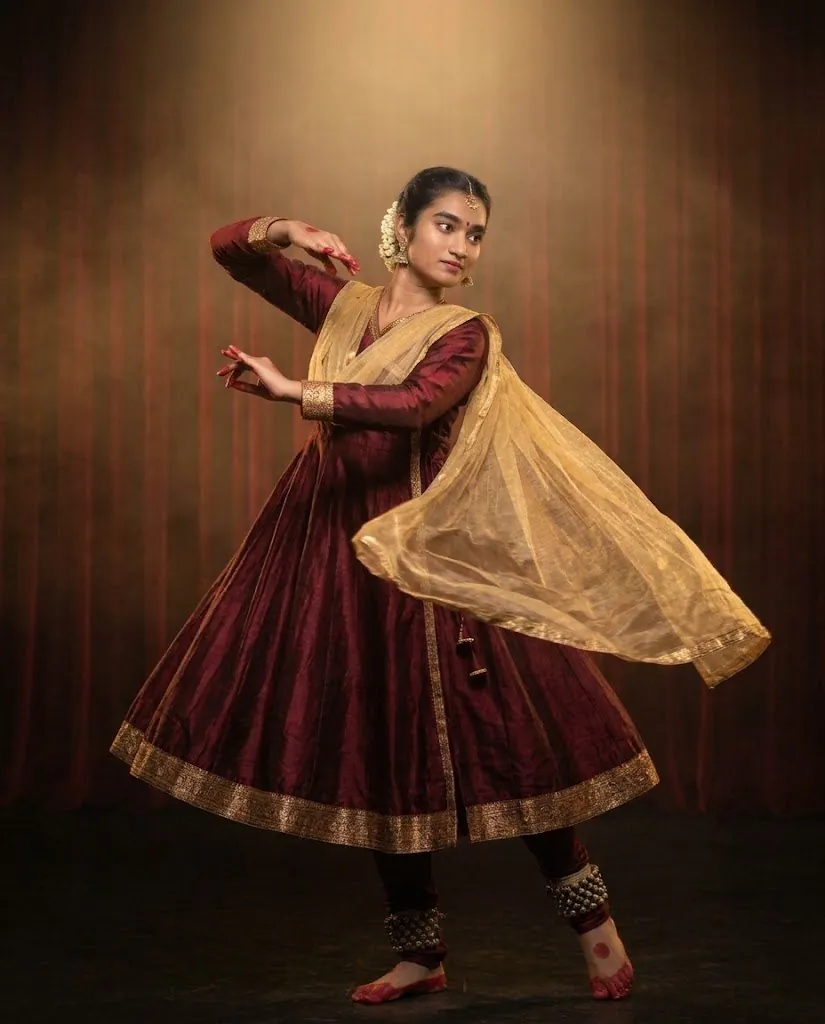
Meet Ashmitha
Ashmitha has trained in Kathak for 17 years, completing her training at Samam Centre of Movements and Dance under Sri Murari Sharan Gupta.
Alongside classical training, she reached proficiency in Western, Folk and Contemporary dance under Smt. Madhu Rawat. That range shapes how she teaches: classical discipline first, with the freedom to explore other styles.
She founded Ridhun to share what she has learnt, in the classical form of Kathak and in Western, Folk and Contemporary styles, with every student who steps onto the floor.
- Kathak
- Prabhakar, completed to the 6th yearSri Murari Sharan Gupta, Samam Centre of Movements and Dance
- Other forms
- Western, Folk and Contemporary, proficiency levelSmt. Madhu Rawat
- On stage
- 16 performances, 2007 to 2019Including Bangalore, Mysore and Mangalore
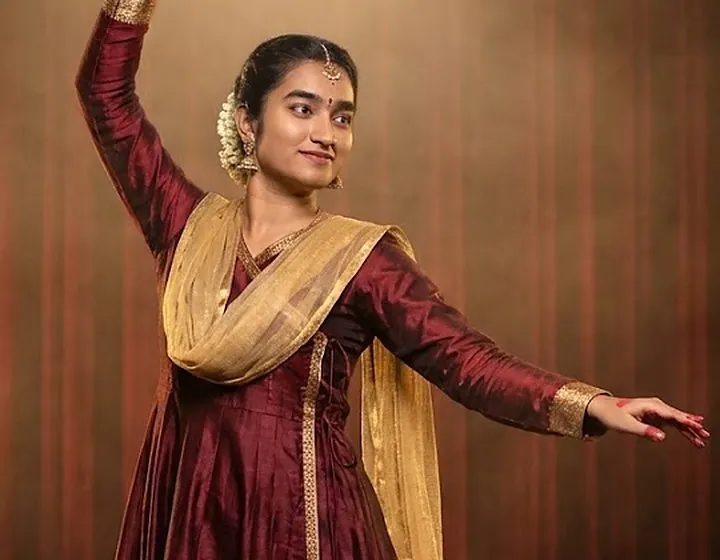 Madhya laya · 90
Ashmitha · teacher
Kathak at home, taught live
Join from anywhere. Ashmitha teaches and corrects in real time, beat by beat, as she would in the studio.
- Find your spaceClear enough floor to step and turn safely. A firm, non-slip floor is kinder to the knees than tiles or thick carpet.
- Set up your cameraPlace your phone or laptop low and far enough back to show you from head to feet, so footwork can be corrected.
- Join the classWarm up, recite the bols, then dance them. Beginners can start without ghungroo and add them once the footwork is steady.
Teentaal, the cycle of sixteen beats
Most Kathak begins in Teentaal: sixteen beats in four groups of four. Press play to hear the tabla play the theka and follow the bols. The khali section drops the bass drum, so it sounds lighter. Every cycle returns to sam, the first beat, where a dancer aims to land.
Madhya laya, 90 beats a minute. Press play to begin.
Performances, 2007 to 2019
Festivals, cultural evenings, annual showcases and medical conferences across Karnataka.
2019
- Navaratri celebrationOrganised by Smt. Padma Kanani, Bangalore
2015
- Varshik Utsav, Samam Centre of Movements and DanceBangalore, February
- Sri Jayadeva Institute of Cardiovascular Sciences and Research conferenceBangalore
- Sri Jayadeva Institute of Cardiovascular Sciences and Research summer conferenceBangalore
2014
- VarshikotsavaRangamandira, February
- Nurses DaySri Jayadeva Institute of Cardiovascular Sciences and Research, May
- Sri Jayadeva Institute of Cardiovascular Sciences and Research conferenceMangalore
2013
- International Nurses DaySri Jayadeva Institute of Cardiovascular Sciences and Research, May
- Ganesh Chaturthi celebrationBegur Road, Bangalore, September
- Sri Jayadeva Institute of Cardiovascular Sciences and Research technical conferenceMysore
2012
- International Nurses DaySri Jayadeva Institute of Cardiovascular Sciences and Research, May
- Ganesh Chaturthi celebrationBegur Road, Bangalore, September
- Kathak performance, NIMHANS Convention HallOrganised by Kalanjali Art of Learning
- Sri Jayadeva Institute of Cardiovascular Sciences and Research conferenceBangalore
2009
- Krishna Janmashtami celebrationKalanjali
2007
- TarangRV Teachers' College
Frequently asked questions
Do I need any dance experience?
No. Complete beginners are very welcome. Batches will be grouped by level, so you learn alongside people at a similar stage. If you have trained in Kathak or another style before, mention it when you register interest.
Which style of Kathak does Ridhun teach?
Kathak in the Lucknow gharana tradition, through a direct line from Pandit Birju Maharaj to Ashmitha's guru, Sri Murari Sharan Gupta. The Lucknow style is known for grace, expressive storytelling and delicate, precise footwork. Read the history of Kathak.
Are classes for children or adults?
The levels and age groups for each batch will be shared with the first timetable. When you register interest, just say whether you are registering for yourself or for a child.
How do online classes work?
Classes run live over video call, so Ashmitha sees you and corrects you in real time, beat by beat. You need a laptop, tablet or phone, a steady internet connection, and enough clear floor to step and turn. Set the camera low and far enough back to show you from head to feet.
Where are the studio classes held?
The studio venue and timings will be announced soon. Everyone who registers interest will hear first.
What should I wear?
Comfortable clothes you can move in, such as a kurta with churidar or leggings. Kathak is danced barefoot, so no shoes or socks. If you have a dupatta, it can be tied neatly at the waist.
When do I need ghungroo?
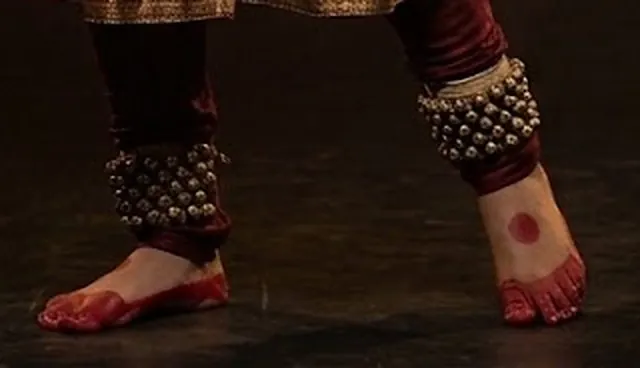
Not at the start. Beginners learn footwork without ghungroo, and Ashmitha will tell you when your tatkaar is steady enough to add them, and what to buy.
How much do classes cost, and how do I pay?
Fees will be confirmed with the first timetable. Everyone on the register list will receive the fees and how to book and pay before any batch begins. Nobody pays until there is a class to join.
Is Kathak good exercise?
Yes. Regular practice builds stamina, strength in the legs and core, posture, balance and coordination. Learning rhythms and compositions also trains memory and focus.
Why are there two email addresses?
Registrations go to register@ridhun.com and every other question goes to contact@ridhun.com. Using Register interest or Contact us sends your message to the right inbox automatically.
Begin your journey with Ridhun
Register for the first studio and online batches, or send us a question about classes and levels.
Register interest
Be the first to hear when batches, timings and fees are confirmed.
Contact us
Ask about levels, online classes or anything else about Ridhun.